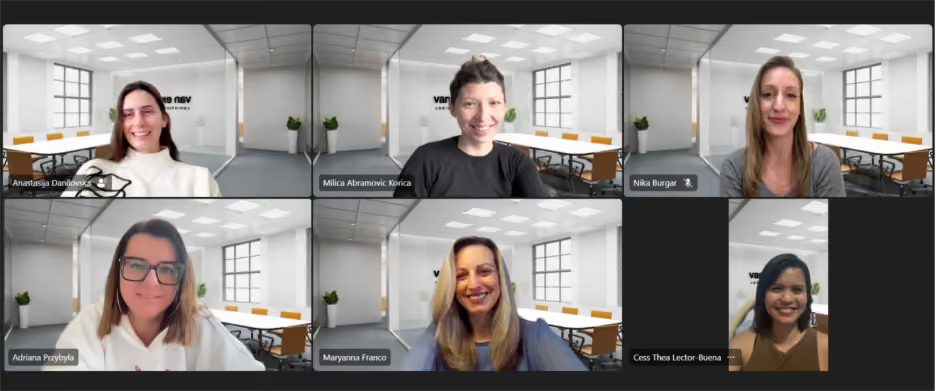
Women in Logistics: Stories, Impact, and Growth in 2026
March 7, 2026
5 min read
Table of Contents
The logistics industry keeps economies moving. Goods cross borders, supply chains, connect continents, and businesses depend on precision at every stage.
For decades, logistics was widely perceived as a male-dominated field, especially in transportation, warehousing, and executive leadership. Today, that perception is changing.
International Women’s Month gives the industry an opportunity to reflect on this shift. It highlights progress, recognises professionals shaping the sector, and encourages companies to continue building inclusive, high-performing teams.
Women are present across every layer of modern logistics. From fleet coordination and warehouse supervision to compliance management and executive leadership, their contribution directly impacts operational performance.
In 2026, logistics is more technology-driven, compliance-focused, and data-oriented than ever before. Success depends on structured planning, communication, risk awareness, and adaptability. A broader talent pool strengthens these capabilities.
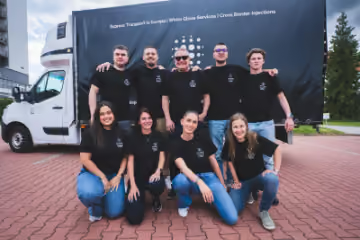
At Van Express, operational excellence is built on precision, collaboration, and reliability. Diverse teams contribute to better decision-making and stronger long-term performance. Recognising women in logistics aligns with our commitment to professional growth and high operational standards across the industry.
The Big Picture: Women in Logistics Today
Women now represent a significant portion of the global supply chain workforce. In many regions, they account for approximately 40 percent of overall logistics and supply chain roles. Participation has steadily increased over the past decade, particularly in planning, procurement, compliance, and management functions.
Representation in transportation roles such as commercial driving remains lower in several markets, though numbers continue to grow year after year. Leadership representation is also improving, with more women entering senior management and executive positions than in previous decades.
This shift reflects broader changes within the industry. Automation, digitalisation, and stricter regulatory frameworks have reshaped job requirements. Technical skills, analytical thinking, and cross-functional coordination now define many core logistics roles.
Why does representation matter?
Diverse teams contribute to stronger operational outcomes. Balanced decision-making improves risk management. Clear communication strengthens coordination between departments, drivers, and clients.
In an industry where delays, compliance errors, and miscommunication carry financial consequences, structured collaboration improves performance.
Growth in female participation is not simply a demographic trend. It reflects an evolving industry that values competence, adaptability, and forward-thinking leadership.
Breaking Barriers: Real Stories from Women in the Field
Behind industry statistics are professionals building careers in dynamic, high-pressure environments. Their day-to-day responsibilities demonstrate how logistics has expanded beyond outdated assumptions.
Women drivers
Female participation in professional truck driving has seen measurable growth over the past decade, although progress has not been linear.
In 2017, women represented just over 7% of professional over the road drivers. By 2019, this increased to approximately 10%. The strongest movement occurred by 2022, when women accounted for 13.7% of professional CDL drivers.
However, the most recent 2024 to 2025 industry benchmark places female representation at 9.5%.
While this reflects a decline from the 2022 peak, it still represents a clear improvement compared to pre 2018 levels. The data shows that progress is possible, but sustained structural change remains a work in progress within driving roles.
Operations managers
Operational roles show a stronger and more consistent female presence.
In dispatcher functions, women represented 44.7% of roles in 2022. By 2024 to 2025, this figure stands at 38.5%. Although slightly lower, it remains significantly higher than representation levels in driving positions.
Looking at broader management levels across supply chain functions:
Managers and supervisors 2016: 30% 2023: 34%
Senior managers 2016: 20% 2023: 31%
The increase at senior management level, rising by 11 percentage points over seven years, reflects meaningful structural advancement in operational leadership.
Warehouse leaders
Across the European transport and storage sector, female participation has remained relatively stable over the past decade.
2012: 22.3% 2022: 22.5%
In the warehousing and support activities subsector specifically, representation increased modestly:
2012: 24.8% 2022: 26%
Although the percentage growth appears small, the absolute number of women employed in the sector increased significantly during this period.
At supervisory and company leadership levels within transportation companies:
2022: 39.6% 2024 to 2025: 34.5%
Short term fluctuations are visible, yet compared to historical levels, leadership representation remains stronger than in previous decades.
C Suite executives
Executive level representation demonstrates one of the most notable long term improvements.
Within transportation companies:
2019: 32% 2022: 33.8% 2024 to 2025: 28%
Although recent data shows a slight decline, overall representation remains higher than in many operational roles.
From a broader supply chain executive perspective:
2018: 14% 2023: 26%
This 12 percentage point increase over five years highlights significant progress at the most senior decision making level.
Taken together, the data reveals a clear pattern. Female representation grows stronger as roles move toward strategic leadership and management. Operational and executive layers show steady advancement, while driving roles continue to experience more volatility.
The trajectory is upward overall, but the pace and stability differ across functions.
Across all roles, one common element remains clear: capability drives progress. As more women enter and advance within logistics, the industry benefits from expanded perspectives and strengthened leadership pipelines.
The movement of goods depends on performance. The future of logistics depends on talent.
Skills That Strengthen Modern Logistics
Logistics performance in 2026 depends on precision, preparation, and coordinated execution. The industry has moved far beyond simple transport from A to B. Today, it requires analytical thinking, structured workflows, and constant communication across teams and borders.
Women working across logistics contribute directly to these core competencies.
Process discipline and structured planning
Cross-border transport, customs documentation, driver compliance, warehouse throughput. Each step must align. Professionals who prioritise detail and preparation reduce operational risk and protect service levels.
Clear communication across departments
Drivers, dispatchers, compliance teams, clients. Logistics performance depends on alignment between all parties involved. Transparent communication improves response time and reduces escalation when unexpected situations arise.
Data-driven decision making
Modern supply chains rely on analytics and performance indicators. Route optimisation, capacity forecasting, cost control, and sustainability tracking require professionals who can interpret data and apply it in real time.
Risk awareness and compliance management
Regulatory enforcement across Europe and globally continues to intensify. Driving hours, posting obligations, emissions standards. Structured compliance planning safeguards businesses from disruption and penalties.
These skills are essential for operational excellence. As more women enter technical, operational, and strategic roles, the industry strengthens its overall capability and resilience.
What Companies Are Doing to Support Women in Logistics
Sustainable progress requires structure. Companies across the logistics sector are implementing practical measures to improve representation and retention.
Defined career pathways
Clear progression from entry-level roles to management positions increases visibility and long-term commitment. Structured development plans provide direction and measurable milestones.
Leadership development programs
Training in strategic planning, negotiation, compliance, and digital systems prepares professionals for senior positions. Strong leadership pipelines benefit the entire organisation.
Flexible operational models
Shift planning, hybrid planning roles, and structured scheduling policies support work-life balance without compromising service levels. Reliable operations and employee wellbeing can coexist when processes are properly designed.
Targeted recruitment initiatives
Partnerships with technical schools, logistics academies, and universities expand awareness of logistics careers among women. Early exposure encourages long-term industry engagement.
For Van Express, performance and people development go hand in hand. Operational reliability depends on capable professionals. Investing in diverse talent strengthens adaptability and long-term competitiveness.
The Future of Women in Logistics
The logistics landscape will continue evolving through automation, artificial intelligence, sustainability requirements, and stricter regulatory frameworks. These changes reshape how companies plan, execute, and measure performance.
Women are increasingly present in the teams driving these transformations. Digital system implementation, carbon reporting frameworks, compliance redesign, customer experience optimisation. Strategic initiatives require structured thinking and collaborative leadership.
Industry projections indicate continued growth in female participation, particularly in management and technical roles. As representation increases, leadership diversity expands, strengthening decision-making at executive level.
International Women’s Month offers an opportunity to recognise progress and focus on continued development.
Logistics performance depends on talent, preparation, and execution. An inclusive industry ensures that the widest range of capable professionals contribute to shaping its future.
Ready to Build Stronger Logistics Teams?
Inclusive growth and operational excellence move forward together.
A resilient logistics network is built on preparation, structured execution, and capable professionals across every role.
At Van Express, we believe performance standards and professional development go hand in hand.
If your organisation is focused on strengthening operational reliability and building future-ready teams, let’s continue raising industry standards together.
Share article
Van Express
Writer
Bereit, mit mehr Erfolg zu liefern?
Erleben Sie eine reibungslose Logistik, die auf Ihre Bedürfnisse zugeschnitten ist. Kontaktieren Sie uns noch heute, um Ihre Lieferung zu buchen oder mehr über unsere Dienstleistungen zu erfahren.
Danke! Wir rufen Sie so schnell wie möglich zurück.
Hoppla! Beim Absenden des Formulars ist etwas schief gelaufen.